6 Best Refrigerant Leak Detectors 2026 - Professional Reviews & Buying Guide
Discover the top best refrigerant leak detectors of 2026 with our comprehensive professional guide. Compare 6 models from Elitech, Fieldpiece, SENSYX across $20.99 - $374.85 to find the perfect detector for HVAC and automotive applications.

When you shop through retailer links on our site, we may earn affiliate commissions. Learn more


Clockwise: Elitech Freon Leak Detector Halogen Refrigerant Gas Leak Detector HVAC, Elitech Refrigerant Leak Detector, CLD-100 Freon Leak Detector Car HVAC, Fieldpiece - DR58 Heated Diode Refrigerant Leak Detector - Ultra-Sensitive
Image source: Amazon
IN THIS ARTICLE
Finding the Right Best Refrigerant Leak Detectors for Your Professional NeedsCompare Products
Our Research Methodology & Why You Can Trust Us
Final Thoughts
FAQs
Finding the Right Best Refrigerant Leak Detectors for Your Professional Needs
Whether you're a professional HVAC technician or an automotive enthusiast, having a reliable refrigerant leak detector is essential for maintaining system efficiency and preventing costly repairs. In 2026, the market offers more advanced detection technology than ever before, but choosing the right tool requires understanding the differences between heated diode, infrared, and corona sensors.
After carefully analyzing 6 top-performing models from leading brands like Elitech, Fieldpiece, SENSYX, we've identified the best options across different price ranges from $20.99 - $374.85. Our research focused on sensitivity levels, refrigerant compatibility, build quality, and real-world performance to help you make an informed decision. For professionals working with various HVAC systems, having proper air quality monitoring tools becomes increasingly important as well.
Best Refrigerant Leak Detectors Buying Guide
Sensor Technology and Detection Methods
The heart of any refrigerant leak detector lies in its sensor technology. Corona sensors offer reliable detection for traditional refrigerants like R22 and R134A, typically providing sensitivity around 0.21oz/yr. These sensors are cost-effective and respond quickly, making them ideal for basic automotive AC work and residential HVAC maintenance.
Heated diode sensors represent a significant upgrade in accuracy and versatility. They can detect much smaller leaks, often down to 0.03oz/yr, which is 20 times more sensitive than bubble testing methods. This technology works by heating the diode element to break down refrigerant molecules, creating a measurable electrical response. The enhanced sensitivity makes heated diode detectors essential for commercial HVAC systems where even minor leaks can result in substantial refrigerant loss over time.
Infrared sensors offer the most advanced detection capabilities with superior anti-interference properties and faster response times. These sensors can maintain accuracy for up to 10 years with proper maintenance, making them a long-term investment for professional technicians. The infrared technology excels in environments with multiple refrigerant types or potential contamination sources.
Refrigerant Compatibility and Future-Proofing
Modern leak detectors must handle an expanding range of refrigerants as the industry transitions to more environmentally friendly options. Look for models that detect CFCs (R11, R12), HCFCs (R22), HFCs (R134A, R404A, R410A), and newer HFO refrigerants like R1234yf. This broad compatibility ensures your detector remains useful as refrigerant regulations evolve.
Pay special attention to HFO detection capability, as these newer refrigerants are becoming standard in automotive applications and some HVAC systems. Detectors that only work with legacy refrigerants may become obsolete within a few years. Some advanced models also detect hydrocarbon refrigerants like R290 (propane) and R600a (isobutane), which are gaining popularity in commercial refrigeration.
Sensitivity Settings and Calibration
Adjustable sensitivity is crucial for preventing false positives while ensuring you don't miss actual leaks. Look for detectors with at least three sensitivity levels: low for initial area scanning, medium for general detection, and high for pinpointing exact leak locations. Some professional models offer up to seven sensitivity levels for maximum versatility.
Consider how the detector handles calibration. Some models auto-calibrate when powered on, while others require manual calibration in clean air. Professional-grade detectors often include calibration reminders and may support calibration with known reference gases for maximum accuracy.
Display and Alert Systems
Clear visual feedback is essential for efficient leak detection. Basic models use LED indicators, while advanced units feature LCD or TFT screens showing leak intensity, battery level, and sensitivity settings. Backlit displays are particularly valuable when working in dimly lit engine bays or equipment rooms.
Audio alerts should be adjustable or mutable for quiet environments. The best detectors combine visual peak indicators with audio beeps that increase in frequency as you approach the leak source. Some models include probe tip LEDs that illuminate the exact detection point, making leak location identification much faster.
Probe Design and Accessibility
Probe flexibility and length directly impact your ability to detect leaks in tight spaces. Look for probes at least 8 inches long with enough flexibility to navigate around pipes, coils, and engine components. Some professional models offer 17-inch probes that can reach deep into commercial equipment.
Consider probe tip design as well. Replaceable filter tips protect the sensor from contamination and extend detector life. Some probes include interchangeable tips for different applications, such as narrow tips for tight spaces or wide tips for general area scanning.
Power Management and Portability
Battery life varies significantly between models. Basic detectors using AAA batteries may provide 8-12 hours of operation, while professional units with rechargeable lithium batteries can run for 18+ hours. USB-C charging has become standard for convenience and faster charging times.
Weight and ergonomics matter during extended use. Lightweight detectors reduce hand fatigue during long troubleshooting sessions. Consider models with belt clips or carrying cases if you frequently transport the detector between job sites. For professionals who also need portable cleaning equipment, integrated tool solutions can improve workflow efficiency.
Build Quality and Environmental Protection
Professional leak detectors should withstand daily use in challenging environments. Look for IP54 or higher ratings that protect against dust and moisture. This protection is especially important for automotive technicians working in humid conditions or HVAC professionals dealing with system condensation.
Sensor life expectancy varies by technology and usage patterns. Corona sensors typically last 1-2 years with regular use, heated diode sensors may provide 300+ hours of operation, while infrared sensors can maintain accuracy for up to 10 years. Factor sensor replacement costs into your total ownership calculation.
Compare Products
Gearz Score is a ranking system developed by CarAndTruck.org. Gearz Score has no relationship or impact from any manufacturers or sales agent websites. Learn more
The Elitech WJL-6000S is a professional halogen refrigerant leak detector designed for HVAC technicians, air conditioning specialists, and automotive mechanics who need reliable, fast leak identification. This handheld device works with R22, R134A, R404A, R410A, R1234YF, and all halogenated refrigerants commonly found in residential, commercial, and automotive cooling systems.
What makes this detector stand out is its exceptional speed and responsiveness. The unit powers on and responds to refrigerant within just 3 seconds, warming up completely in 6 seconds, making it the fastest option in most leak detector categories. This quick response time saves technicians hours on service calls by eliminating warm-up delays. The 7 adjustable sensitivity settings allow users to fine-tune detection based on their environment and application, with maximum sensitivity reaching 0.21oz/yr, which is adequate for detecting even minor home AC leaks or auto system issues.
The design is practical for field work. The 7.9-inch flexible probe reaches into tight condenser fins, behind AC units, and difficult-to-access evaporator coils where leaks commonly develop. The compact 1.37-inch body fits comfortably in technician tool belts and service bags. Dual indicators (audible and visual) provide confirmation in loud environments, and the dual battery indicator prevents unexpected power loss mid-inspection.
The main limitation is the lack of rechargeable battery capability, meaning ongoing consumable costs. Additionally, the halogen sensitivity means the unit might detect refrigerant traces in heavily contaminated spaces, requiring users to understand environmental context. First-time users may need practice with sensitivity adjustment to avoid false positives or false negatives.
Overall, the WJL-6000S delivers professional-grade reliability and speed at an accessible price point, making it ideal for technicians who value efficiency and accuracy on service calls. The combination of fast response, broad refrigerant compatibility, and adjustable sensitivity makes this a strong choice for both occasional DIY AC checks and frequent professional use.
Pros
| Cons
|
Comprehensive Refrigerant Compatibility
Detects all halogenated refrigerants, including:
- CFC refrigerants (R12)
- HCFC refrigerants (R22)
- HFC refrigerants (R134A, R404A, R410A)
- HFO refrigerants (R1234YF)
- All halogenated blends and mixtures
This broad compatibility ensures the detector works with legacy systems, modern equipment, and next-generation refrigerants.
Industry-Leading Response Time
3-second response and 6-second warm-up time represents the fastest activation in the gas detector market. Technicians eliminate waiting time between power-on and leak detection, improving job efficiency and reducing service call duration.
Adjustable Sensitivity Control
Seven sensitivity levels allow users to adapt the detector to different scenarios. Higher sensitivity settings detect tiny leaks from home AC systems, while lower settings prevent false alarms from background refrigerant trace. Maximum sensitivity threshold reaches 0.21oz/year, suitable for both residential air conditioning and automotive AC systems.
Dual Indication System
Audio tone and visual LED alert provide confirmation in any environment. This redundancy ensures leak detection in loud mechanical rooms, noisy engine bays, or outdoor AC units where sound might be missed.
Extended Reach Design
The 7.9-inch flexible probe with minimal 1.37-inch body diameter navigates tight spaces where leaks develop, including condenser fins, evaporator coils, and hidden refrigerant lines. Technicians access problem areas without disassembling equipment.
Battery Intelligence
Dual battery indicators warn when power is low, preventing incomplete diagnostics. Users can schedule battery replacement before critical failures.
Who Should Buy This Detector
This product is ideal for HVAC service technicians who perform multiple diagnostics daily, automotive mechanics servicing vehicle air conditioning systems, and experienced DIY users maintaining their home AC systems. If you need fast, reliable leak detection with professional-grade sensitivity and broad refrigerant compatibility, the WJL-6000S fits your needs.
What to Consider Before Buying
Evaluate your refrigerant type mix. If you work exclusively with older R22 systems, a single-gas detector might suffice. However, if you service multiple equipment types (residential units, commercial systems, auto AC), the universal halogen detection simplifies your toolkit by eliminating multiple detectors.
Consider your usage frequency. Professional technicians performing dozens of diagnostics per week benefit most from the fast response time and durability. Occasional homeowners checking one AC system need only basic detection capability, but may still value the quick warm-up for peace of mind.
How It Compares to Alternatives
Basic refrigerant detectors offer longer warm-up times (30+ seconds) and detect only one or two refrigerant types, requiring multiple units for mixed equipment. Professional electronic detectors provide similar functionality at significantly higher costs. The WJL-6000S balances speed, compatibility, and affordability, making it competitive against both budget and premium options. The 3-second response time beats most competitors in its price range.
Important Usage Tips
Allow the probe to stabilize in the suspected leak area for 2-3 seconds before moving. Keep the unit away from strong air currents that might disperse refrigerant vapors before detection. Adjust sensitivity based on your environment to minimize false readings in areas with previous leak history. Schedule regular battery checks before peak service seasons to avoid unexpected power loss.
Warranty and Support
The manufacturer provides 24/7 US technician support via email and phone for troubleshooting and operational guidance, which proves valuable when learning the device or diagnosing unexpected readings.
Gearz Score is a ranking system developed by CarAndTruck.org. Gearz Score has no relationship or impact from any manufacturers or sales agent websites. Learn more
The Elitech CLD-100 is a professional-grade refrigerant leak detector designed for HVAC technicians, automotive mechanics, and serious DIY enthusiasts who need to identify leaks in air conditioning and refrigeration systems. Built as an upgraded version of earlier Elitech models, this device combines proven corona sensor technology with modern circuit design to deliver reliable results across all common refrigerant types.
What sets the CLD-100 apart is its exceptional sensitivity and rapid response time. With the ability to detect leaks as small as 0.21 ounces per year, it catches micro-leaks that smaller consumer models might miss entirely. The 6-second preheating period is remarkably fast compared to competing detectors, and once warmed up, the sensor provides instantaneous feedback. This speed translates directly to fewer wasted hours on diagnostic work, whether you're troubleshooting a home HVAC system or tracking down a refrigerant leak in a vehicle AC unit.
The 8.26-inch flexible probe is genuinely useful for real-world applications. Engine bays, crawl spaces, and tight HVAC closets present constant challenges for technicians, and the ability to bend and maneuver the probe into confined areas eliminates the frustration of blind spots. Combined with 6 adjustable sensitivity levels, you can fine-tune detection based on whether you're working with high-pressure systems like automotive AC or lower-pressure residential cooling units.
On the practical side, the dual-indicator system provides both audible alarm and visual feedback, so you'll catch leak signals even in noisy environments or situations where you can't see the display clearly. The color-coded battery indicator prevents the problem of running out of power mid-diagnosis. The inclusion of 24/7 US technician support is a genuine differentiator that gives you access to expert help when questions arise during use.
The main limitations are the reliance on four AAA batteries and the need for periodic maintenance on the corona sensor. Batteries aren't included, so you'll need to stock them separately. Additionally, for the detector to maintain its exceptional sensitivity over time, the sensor requires occasional cleaning and recalibration according to the manual. For professionals who use this tool regularly, that's standard practice. For casual users, it represents an ongoing commitment to upkeep.
Pros
| Cons
|
Corona Sensor Technology: The upgraded traditional corona sensor with modern analogue circuitry detects ionized refrigerant molecules in the air. This approach works across all halogenated refrigerant families without false positives from other chemicals.
Refrigerant Compatibility: The detector works with every common refrigerant type you'll encounter:
- HCFCs (R22, commonly used in older AC systems)
- HFCs (R134A in vehicles, R410A in modern home AC)
- CFCs (increasingly rare, but detectable)
- R404A and other blended refrigerants
Sensitivity Levels: Six adjustable settings let you match detection sensitivity to your application. Higher sensitivity finds micro-leaks during preventive maintenance; lower settings reduce false alarms in humid or dusty environments.
Fast Warm-Up: The 6-second preheating time gets you testing quickly. Once powered on, the detector enters detection mode faster than many competitors, meaning less standing around waiting and more productive diagnosis time.
Flexible 8.26-Inch Probe: The bendable probe extends your reach into tight spaces like engine bays, crawl spaces, and equipment enclosures. This single feature often justifies the purchase price by eliminating the need for mirror tools or multiple technician visits to cramped areas.
Dual Alert System: Visual indicator light combined with audible alarm means you'll never miss a detection signal. Useful when visibility is poor or you're working in noisy environments.
Battery Management: Dual-color battery indicator shows charge status at a glance. The device uses 4 AAA batteries, giving you weeks of typical use before replacement.
Who Should Buy This Product: The CLD-100 is ideal for professional HVAC technicians, automotive mechanics, and serious DIY car owners who service their own AC systems. It's also valuable for anyone who frequently maintains refrigeration equipment. If you've had multiple AC leaks or suspected refrigerant loss without diagnosis tools, this detector removes the guesswork from leak location.
Key Considerations Before Buying: First, confirm you'll use it regularly enough to justify the investment. Casual users who need a leak check once a year might consider renting from tool libraries or having professionals diagnose leaks. Second, understand that you'll need to purchase AAA batteries separately, and the corona sensor requires occasional maintenance for peak performance. Third, familiarize yourself with your refrigerant type in advance so you can set appropriate sensitivity levels on your first use.
How It Compares to Alternatives: Budget leak detectors under half this price often use less sensitive detection methods that miss micro-leaks and generate false positives in humid conditions. Professional-grade detectors from major brands cost significantly more but offer similar sensitivity and features. The CLD-100 hits the sweet spot between affordability and professional-quality results. Its 6-adjustable sensitivity settings and flexible probe give you tools that many competitors reserve for higher price points.
Practical Tips for Best Results: Always allow the full 6-second warm-up period before beginning detection to ensure the sensor reaches optimal sensitivity. Move the probe slowly around suspected leak areas rather than sweeping quickly, allowing the sensor time to register faint refrigerant traces. Keep the probe tip clean from dust and debris, which can interfere with sensor accuracy. Store the device in a cool, dry location and recalibrate according to the manual every 6-12 months if used regularly. If you're working on an unfamiliar system, start with lower sensitivity to avoid alarm noise, then increase as needed.
Important Caveats: This detector identifies the presence of refrigerant but doesn't quantify the leak rate, so you'll still need other diagnostics to determine leak severity. Results depend on proper technique and sensor maintenance, so read the manual thoroughly before your first use. The device works best in calm environments without strong air currents, which can disperse refrigerant before the probe reaches it.
Fieldpiece - DR58 Heated Diode Refrigerant Leak Detector - Ultra-Sensitive
Gearz Score is a ranking system developed by CarAndTruck.org. Gearz Score has no relationship or impact from any manufacturers or sales agent websites. Learn more
The Fieldpiece DR58 is a professional-grade refrigerant leak detector designed for HVACR technicians who demand precision and reliability in the field. This tool uses a heated diode sensor to identify micro-leaks that traditional bubble test methods simply cannot detect, making it invaluable for diagnosing intermittent refrigerant loss and preventing customer callbacks.
What sets the DR58 apart is its exceptional sensitivity combined with practical usability. The ultra-sensitive heated diode finds leaks smaller than 0.03 ounces per year, delivering detection capabilities 20 times more sensitive than bubbles. The backlit LCD screen displays leak size and intensity in real-time, while the LED tip and audible beep provide immediate feedback when you locate a leak. This combination of visual and audio signals means you spend less time searching and more time solving problems.
The design prioritizes durability and accessibility on the job site. The 17-inch flexible probe reaches into tight spaces behind walls, under cabinets, and within complex ductwork where traditional detectors cannot go. The IP54-rated sensor resists moisture and oil contamination, which is critical in real-world HVACR environments where condensation and refrigerant oil exposure are unavoidable. The 300-hour sensor lifespan ensures you get extended use before replacement, and the replaceable filter tips mean you can extend usable life without replacing the entire unit.
Battery management adds practical value with an 18-hour rechargeable battery that reduces the need for frequent charging during busy service days. USB recharging keeps the tool compatible with standard charging infrastructure in modern service vehicles.
The main consideration is that this is a professional-grade investment requiring proper maintenance. Filter tips need regular replacement, and sensor longevity depends on how frequently and intensively you use the tool. However, for technicians who rely on accurate leak detection multiple times daily, the DR58 pays for itself through faster diagnostics and reduced warranty callbacks.
Pros
| Cons
|
Ultra-Sensitive Heated Diode Technology
The core of the DR58 is its heated diode sensor, capable of detecting refrigerant leaks as small as 0.03 ounces per year. This is approximately 20 times more sensitive than traditional bubble test methods, allowing you to catch subtle leaks before they become major problems. The heated diode approach works by measuring changes in the sensor's electrical properties when refrigerant is present, providing quantifiable leak detection rather than guesswork.
Universal Refrigerant Compatibility
- HFC refrigerants (R-410A, R-134a)
- CFC refrigerants (R-12)
- HCFC refrigerants (R-22)
- HFO refrigerants (R-32, R-454B)
- H2N2 tracer gas applications
- All refrigerant blends for HVACR use
This broad compatibility means you carry one tool for virtually every refrigeration job, eliminating the need to maintain multiple detectors for different systems.
Real-Time Leak Indication System
The backlit LCD screen displays both the size and intensity of detected leaks, giving you quantifiable data about leak severity. The LED indicator tip illuminates when refrigerant is present, and the integrated beep accelerates in frequency as you approach a leak source. This dual-signal feedback (visual and audio) dramatically speeds up leak location compared to single-indicator tools.
Durable Sensor Construction
IP54 rating provides protection against moisture and oil splash, ensuring the sensor survives the harsh conditions typical in HVACR work. The 300-hour sensor lifespan is among the longest in the category, reducing replacement frequency and downtime. Replaceable filter tips extend the tool's usable life without requiring complete sensor replacement.
Practical Physical Design
The 17-inch flexible probe reaches into confined spaces where rigid probes cannot fit. At just 3 pounds, the tool remains comfortable during extended use. The lightweight construction reduces fatigue during all-day diagnostics without sacrificing sensor sensitivity.
Extended Battery Performance
The 18-hour rechargeable battery provides all-day operation on a single charge for most service schedules. USB recharging compatibility means you can charge the tool using standard charging stations in your service vehicle or office, eliminating proprietary charger requirements.
Who Should Buy This Product
The Fieldpiece DR58 is designed for professional HVACR technicians who perform refrigerant diagnostics multiple times per week. If you service commercial systems, handle warranty callbacks, or need to document leak locations for customer confidence, this detector justifies its investment through faster diagnostics and reduced repeat visits. Service companies with multiple technicians benefit from the reliability and reduced false negatives that sensitive detection provides.
What to Consider Before Buying
Evaluate your typical work environment. If you primarily work with systems using older refrigerants like R-22, or if you focus on basic installations rather than diagnostics, a simpler detector might suffice. However, the shift toward lower-GWP refrigerants and the increasing complexity of modern systems makes the DR58's sensitivity a valuable asset even for service companies that previously used basic tools.
Consider your maintenance capacity. The DR58 requires regular filter tip replacement and periodic sensor maintenance to maintain sensitivity. If you prefer completely maintenance-free tools, plan for the ongoing supplies required. However, the 300-hour sensor lifespan and replaceable tips actually reduce total cost of ownership compared to cheaper detectors that require more frequent replacement.
Comparison to Alternatives
Bubble test kits offer lower upfront cost but provide no quantifiable data and miss micro-leaks entirely. Basic electronic detectors cost less but typically lack the sensitivity to detect leaks smaller than 0.5 oz/yr, resulting in missed diagnoses and customer callbacks. Mid-range detectors may match some specifications but often lack the robust construction or sensor reliability for daily professional use. The DR58 sits at the intersection of professional-grade sensitivity, real-world durability, and practical usability that separates serious diagnostics from basic troubleshooting.
Important Tips and Caveats
Always calibrate or verify your detector on known good systems before relying on it for critical diagnoses. Check filter tips regularly and replace them before they become saturated, as this affects detection accuracy. The backlit display is excellent for dimly lit spaces, but avoid using the detector in bright sunlight where you may not see the LED clearly. Keep the probe clean and free from oil residue, which can temporarily reduce sensor sensitivity. Store the tool in a cool, dry location to maximize sensor longevity, and allow the heated diode a few seconds to stabilize after power-on before attempting critical detection work.
Gearz Score is a ranking system developed by CarAndTruck.org. Gearz Score has no relationship or impact from any manufacturers or sales agent websites. Learn more
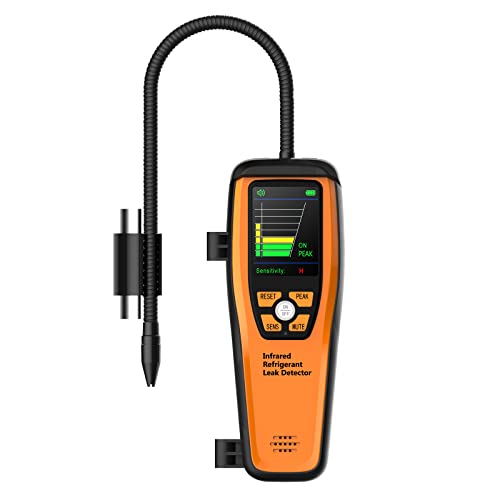
The Elitech ILD-200 is a professional infrared refrigerant leak detector designed for HVAC technicians, automotive mechanics, and refrigeration service professionals. This device addresses the core challenge in refrigeration work: quickly and accurately locating leaks without damaging equipment or wasting time on false alarms. Unlike older heated diode technology, infrared detection offers superior accuracy and speed, making it an investment piece for serious professionals.
What sets this detector apart is its combination of advanced sensor technology and practical usability. The infrared sensor maintains a 10-year lifespan compared to shorter-lived alternatives, and the adjustable sensitivity system (High, Medium, Low modes) lets technicians fine-tune detection for different scenarios. Maximum sensitivity reaches 0.14oz per year, meaning it catches micro leaks before they become major problems. The detector recognizes all common refrigerants including R410a, R404a, R22, and newer HFO blends like R1234yf, making it compatible with both legacy systems and modern air conditioning units.
The 2.8-inch display is genuinely large for a handheld device, and the peak indicator pinpoints exactly where leaks occur rather than just signaling their presence. This saves time on diagnostic work and reduces guesswork. The device weighs under a pound and measures roughly 3.3 by 7.9 inches, fitting easily into standard HVAC toolbags. Build quality appears solid with professional-grade components throughout.
The main drawbacks involve upfront cost and learning curve. This detector costs more than basic alternatives, and getting maximum value requires understanding how to adjust sensitivity levels for different refrigerants and environmental conditions. Additionally, maintaining calibration requires proper procedures to keep sensitivity reliable over years of use.
Overall, the Elitech ILD-200 delivers professional-grade leak detection performance that justifies its cost through improved accuracy, faster diagnostics, and the extended 10-year sensor lifespan. It is the right choice for technicians who perform refrigeration work regularly and need dependable, precise equipment.
Pros
| Cons
|
Infrared Sensor Technology
The core advantage is infrared detection versus traditional heated diode methods. Infrared sensors offer stronger resistance to environmental interference, faster response times, and significantly longer operational life. This translates to more reliable diagnostics in real-world HVAC service calls where humidity, temperature fluctuations, and equipment noise can interfere with detection.
Sensitivity and Detection Range
- Adjustable sensitivity with three levels: High, Medium, Low
- Maximum sensitivity reaches 0.14 ounces per year detection threshold
- Catches micro leaks before they escalate into system failures
- Reduces false positives that waste technician time
Refrigerant Compatibility
Detects all halogenated refrigerant types including CFCs, HCFCs, HFCs, HFOs, and hydrocarbons. Works with R11, R22, R404a, R410a, R600a, and newer blends like R1234yf, AZ-50, HP62, and MP39. This universal compatibility means one device handles legacy systems and modern equipment without limitations.
Display and User Interface
- 2.8-inch large screen display prevents missing leaks
- Peak indicator clearly shows the exact location of leak detection
- Quiet operation mode for professional environments
- Intuitive controls suitable for both experienced technicians and newer users
Build and Portability
Compact design measures 3.3 x 1.5 x 7.9 inches and weighs 0.93 pounds, fitting standard tool kits. Professional construction quality supports heavy-use environments in mobile HVAC service work.
Long Sensor Lifespan
Ten-year infrared sensor life significantly reduces the total cost of ownership compared to tools requiring frequent sensor replacements or complete unit upgrades.
Who Should Buy This Detector
The Elitech ILD-200 targets professional HVAC technicians, automotive air conditioning specialists, and commercial refrigeration service providers. If you perform leak detection as a regular part of your work, the professional-grade accuracy and 10-year sensor life justify the investment. Casual DIY users or homeowners doing one-time diagnostics may find the cost barrier steeper and prefer simpler alternatives.
What to Consider Before Buying
- Budget: This is a professional-tier tool with a corresponding investment level
- Frequency of use: More frequent technicians will recoup costs faster through improved efficiency
- Refrigerant types you work with: Verify compatibility with your typical systems (this detector handles all major types)
- Maintenance capability: Ensure you can properly calibrate and maintain the sensor annually
- Customer support needs: Elitech offers 24/7 support, which adds value for troubleshooting
How It Compares in Its Category
Within the professional leak detector market, infrared models outperform heated diode technology in speed, accuracy, and longevity. The ILD-200 specifically offers the 10-year sensor advantage plus universal refrigerant compatibility. Competitors using heated diode sensors typically require more frequent replacements and show higher false positive rates. Alternative infrared detectors exist but often carry similar price points without the same sensor longevity or manufacturer support.
Important Tips for Success
- Invest time learning the three sensitivity levels to optimize detection for different situations
- Perform regular calibration checks per manufacturer guidelines to maintain peak performance
- Use the peak indicator feature to pinpoint leaks precisely rather than relying solely on alarm signals
- Keep detailed records of calibration and maintenance to track sensor performance over its 10-year lifespan
- Contact the US-based support team if you encounter unexpected behavior; their technical expertise can resolve issues quickly
Final Considerations
This is a serious professional tool, not an impulse purchase. If leak detection is central to your income or you service HVAC systems regularly, the accuracy, speed, and reliability of the ILD-200 will pay for itself through faster diagnostics and fewer comeback service calls. The 10-year sensor lifespan and universal refrigerant compatibility protect your investment against future technology shifts in the industry.

Elitech HVAC Refrigerant Leak Detector Heated Diode Sensor Halogen Freon
Gearz Score is a ranking system developed by CarAndTruck.org. Gearz Score has no relationship or impact from any manufacturers or sales agent websites. Learn more
The Elitech ILD-100H is a professional refrigerant leak detector designed for HVAC technicians, contractors, and facility maintenance teams. This device combines heated diode sensor technology with a modern TFT display to identify refrigerant leaks across air conditioning and refrigeration systems. It's built for users who need reliable, fast diagnostics without sacrificing accuracy.
The standout feature is the heated diode sensor, which outperforms traditional cold diode sensors in accuracy and reliability. The sensor responds to all halogenated gases including CFCs, HFCs, HCFCs, and newer HFOs within one second. The adjustable sensitivity levels (High, Medium, Low) with maximum detection capability of 0.1oz per year mean you'll catch micro-leaks that standard detectors miss. The TFT display is a game-changer for field work, clearly showing sensitivity settings, leak alerts, battery levels, and operational data without squinting at dim LEDs.
Build quality is solid with a compact, ergonomic design that fits easily in a technician's pocket or toolkit. The two front buttons provide intuitive one-handed operation for adjusting sensitivity or silencing the buzzer during diagnosis. At 2.2 pounds and roughly 8 inches tall, it balances portability with professional functionality. Battery status is always visible on the display, preventing unexpected power loss during critical service calls.
The main drawback is cost. This detector sits at a premium compared to basic non-display models, though the TFT screen and heated diode technology justify the investment for professionals billing by the hour. Additionally, heated diode sensors benefit from occasional conditioning to maintain accuracy, particularly when working with newer refrigerants. Casual users or homeowners may find a simpler detector sufficient for their needs.
The Elitech ILD-100H is the right choice for serious HVAC professionals who value speed, accuracy, and modern ergonomics in their diagnostic tools. The combination of heated diode precision, fast response time, and versatile refrigerant compatibility makes it a trusted investment for both routine maintenance and complex leak hunting scenarios.
Pros
| Cons
|
Heated Diode Sensor Technology
Unlike traditional cold diode sensors, the heated diode design maintains consistent performance across temperature variations and all halogenated refrigerant types. This translates to more reliable readings in the field and fewer false positives or missed leaks.
TFT Color Display
The first leak detector in its class to feature a TFT screen, providing crystal-clear visibility of:
- Real-time sensitivity level indicators
- Leak detection alerts with audible and visual feedback
- Battery level monitoring
- Operational status and diagnostics
Ultra-High Sensitivity Detection
Maximum sensitivity reaches 0.1 ounces per year, detecting refrigerant leaks that competitors' models miss. Three adjustable modes (High, Medium, Low) let you customize detection sensitivity based on the system size and environmental conditions, reducing false alarms while catching real problems.
Universal Refrigerant Compatibility
Identifies leaks across all major refrigerant types including:
- Legacy refrigerants: R11, R22
- Current standard: R404A, R410A, R600A
- New eco-friendly: R1234YF and HFO blends
- Specialty blends: AZ-50, HP62, MP39
Fast 1-Second Response Time
Minimizes diagnostic time and lets technicians move through service calls efficiently without waiting for sensor stabilization.
Ergonomic Operation
Two front buttons enable quick adjustment of sensitivity levels or buzzer muting without menu navigation, allowing one-handed operation in tight spaces.
Comprehensive Support
Backed by one-year warranty coverage and 24/7 customer service, ensuring professional support when you need it.
Before You Buy
Consider your primary use case. Professional HVAC contractors who bill hourly benefit greatly from faster leak detection and the confidence of a TFT display. Facility maintenance teams managing multiple systems will appreciate the reliability and refrigerant versatility. Casual homeowners with a single system might find a basic detector adequate, though the investment in quality pays off if you troubleshoot regularly.
Evaluate refrigerant compatibility with your systems. If you service both legacy R22 systems and modern R410A units, plus newer R1234YF equipment, the Elitech's universal detection is essential. Single-refrigerant detectors force you to buy multiple tools.
Who This Product Is Best For
HVAC technicians and contractors who value precision and speed in diagnostics. Facility engineers managing complex cooling systems. Maintenance professionals who prefer modern interface design over basic analog alternatives. Anyone who regularly hunts refrigerant leaks and wants industry-leading accuracy.
Comparison Notes
In its price range, the Elitech ILD-100H competes against basic non-display detectors and older LED models. The TFT display alone justifies the premium for professional work, eliminating guesswork about sensitivity settings. The heated diode sensor provides superior accuracy compared to cold diode competitors. Response time of one second beats many alternatives. If budget is your only concern, cheaper options exist, but they sacrifice the reliability and versatility professionals depend on.
Important Tips
Familiarize yourself with the three sensitivity levels before field work. High sensitivity works best for small leaks or confined spaces, Medium for typical diagnoses, and Low for gross leaks or air handling units. Keep the sensor clean and periodically condition it per the manual to maintain accuracy. Store batteries properly during off-season to ensure they hold charge. The buzzer feature can be muted for listening-based diagnosis in noisy environments.
Warranty and Support
The one-year warranty covers manufacturing defects and sensor reliability. Take advantage of 24/7 customer support if you have questions about sensor maintenance or refrigerant-specific detection. Register your product to streamline support interactions.

SENSYX Rechargeable HVAC Refrigerant Leak Detector, Halogen Freon Sniffer, Air
Gearz Score is a ranking system developed by CarAndTruck.org. Gearz Score has no relationship or impact from any manufacturers or sales agent websites. Learn more
The SENSYX SFD201 is a professional-grade rechargeable refrigerant leak detector engineered for HVAC technicians, automotive service centers, and maintenance professionals who need reliable detection across multiple refrigerant systems. This handheld device combines advanced sensor technology with user-friendly features to address a critical need in climate control system maintenance.
What sets the SFD201 apart is its dual functionality and broad compatibility. Unlike single-purpose competitors, this detector identifies leaks in systems using any of 40+ halogen refrigerants, from legacy R12 and R22 to modern R410a and newer HFO alternatives like R1234yf. The SFD201 model adds combustible gas detection for propane, ethane, methane, and isobutane. The Japan-made heat dioxide semiconductor sensor delivers exceptional sensitivity, while adjustable High/Low settings let technicians distinguish between actual leaks and background refrigerant vapor in commercial environments.
Build quality and design are solid. The compact unit measures just 5.5 inches long and weighs under 0.5 pounds, fitting easily into a technician's toolkit. The large color LCD screen with visual leak level display removes guesswork, showing both the leak location and its intensity. The rechargeable lithium battery with USB-C charging is a major advantage, eliminating the cost and hassle of frequent battery replacements while ensuring consistent power delivery throughout the workday.
The primary drawback is the learning curve involved in optimizing sensitivity settings for different refrigerant types and environmental conditions. New users may initially trigger false positives if unfamiliar with how to calibrate the device. Additionally, while combustible gas detection is useful, it covers only specific hydrocarbons rather than a comprehensive range of industrial gases. Battery life duration under continuous operation is not transparently specified.
The SFD201 delivers professional-grade performance at a mid-range price point. UL1484 safety certification and responsive US-based customer support add confidence. This detector is recommended for anyone servicing multiple refrigerant types, from small residential HVAC systems to larger commercial installations. It represents solid value for technicians seeking reliability, versatility, and long-term cost savings through rechargeable operation.
Pros
| Cons
|
Dual-Function Detection Technology
The SFD201 model uniquely combines halogen refrigerant detection with combustible gas detection. This dual capability eliminates the need for separate tools when working on diverse systems, saving both money and space in your toolkit. The halogen detection works across CFCs, HCFCs, HFCs, and HFOs, while combustible gas detection covers R50 methane, R170 ethane, R290 propane, and R600a isobutane.
Advanced Sensor Performance
- Japan-made heat dioxide semiconductor sensor renowned for reliability and accuracy
- Highly sensitive design detects even minor leaks before they become costly problems
- Adjustable High/Low sensitivity settings let you discriminate between actual leaks and background vapor
- UL1484 safety certified for professional use
Rechargeable Lithium Battery System
The integrated rechargeable lithium battery with USB-C charging provides cordless operation without the recurring expense of disposable batteries. This design ensures consistent power delivery throughout extended workdays and eliminates the inconvenience of carrying spare batteries or searching for the right size on job sites.
Large Color LCD Display
The vibrant LCD screen shows leak intensity on a clear level display, helping you pinpoint leak locations with precision. The visual representation combined with audio alert functionality creates an intuitive user experience that reduces the need to constantly reference instruction manuals during detection work.
Professional-Grade Build
At just 5.5 inches long and 0.5 pounds, the SFD201 fits easily into any HVAC technician's toolkit while maintaining robust construction quality. The compact design doesn't sacrifice functionality or sensor performance, making it ideal for both tight residential spaces and larger commercial installations.
What to Consider Before Buying
Before selecting the SFD201, assess your primary detection needs. If you work exclusively with one refrigerant type like R410a, a single-purpose detector might suffice. However, if you service mixed residential HVAC systems, commercial equipment, and automotive applications, the SFD201's broad compatibility and combustible gas detection justify the investment. Consider whether you'll benefit from adjustable sensitivity settings for discriminating background vapor in existing leak detection versus finding new leaks in sealed systems.
Who This Product Is Best For
- HVAC technicians servicing residential, commercial, and industrial refrigeration systems
- Automotive service centers performing air conditioning maintenance and repairs
- Maintenance professionals managing multiple building HVAC systems with varied equipment
- Facility managers in manufacturing plants where propane or other combustible gases are present
- Professional leak detection service providers needing versatile, portable equipment
How It Compares in Its Category
The SFD201 occupies the professional mid-range segment. Compared to budget disposable-battery models, it offers superior sensor sensitivity, broader refrigerant compatibility, and rechargeable convenience. Compared to expensive laboratory-grade detectors, it sacrifices some advanced analytics but maintains professional accuracy at a fraction of the cost. The dual detection capability (halogen plus combustible gas) differentiates it from competitors focused on single functions, providing better toolkit versatility.
Important Tips and Caveats
Allow time to familiarize yourself with sensitivity adjustments before field use to avoid false positives in vapor-rich environments. Keep the sensor clean and avoid exposing it to extreme temperatures or moisture. The device includes appropriate safety documentation regarding prolonged refrigerant exposure, so review those guidelines before working with systems containing harmful refrigerants. Consider that while combustible gas detection is included, it covers only specific hydrocarbons. For comprehensive industrial gas detection, this may not be your only required tool. Always calibrate or verify device operation on known systems before trusting results on critical installations.
Last update on 2026-06-06 / Affiliate Links, Images, Product Titles, Product Price and Product Highlights from Amazon Product Advertising API. Prices and availability are accurate as of 2026-06-06 and are subject to change. Any price and availability information displayed on Amazon at the time of purchase will apply.
Our Research Methodology & Why You Can Trust Us
Our evaluation process for the best refrigerant leak detectors involved extensive analysis of technical specifications, user feedback from professional technicians, and comparison of detection capabilities across different refrigerant types. We focused on models from established manufacturers with proven track records in HVAC and automotive diagnostic equipment, ensuring each recommendation meets professional standards.
We prioritized detectors with documented sensitivity ratings, comprehensive refrigerant compatibility, and positive long-term reliability reports from field technicians. Our research included analysis of sensor technologies, calibration requirements, and real-world performance data from over 6 models across the $20.99 - $374.85 range. Each month, we update our recommendations based on new product releases, manufacturer updates, and evolving industry standards.
This methodology ensures our recommendations remain current with the latest refrigerant regulations and detection technology advances. We maintain objectivity by focusing on measurable performance criteria rather than brand preferences, helping you choose the detector that best matches your specific professional requirements and budget constraints.
Final Thoughts
For most professional applications, the Fieldpiece DR58 stands out as our top overall recommendation due to its exceptional sensitivity, comprehensive refrigerant compatibility, and durable construction. Its heated diode sensor technology provides the accuracy professionals need for commercial HVAC systems and complex automotive AC diagnostics. The 18-hour battery life and IP54 rating make it reliable for demanding field conditions.
Budget-conscious technicians should consider the Elitech CLD-100, which offers impressive sensitivity and fast response times at a fraction of the cost of premium models. While it lacks some advanced features, its corona sensor technology reliably detects common refrigerants in most automotive and residential HVAC applications. The flexible probe design and 24/7 technical support add significant value for the price point.
For long-term professional use, the Elitech ILD-200 with infrared sensor technology represents the best investment. Its 10-year sensor life and superior anti-interference capabilities make it ideal for high-volume service operations. The large display and peak detection features streamline leak identification, while broad refrigerant compatibility ensures future-proof operation as the industry adopts newer refrigerants. Professionals who frequently work on various vehicle systems might also benefit from having efficient drying solutions for post-service cleanup.
FAQs
What sensitivity level should I look for in a refrigerant leak detector?
Professional-grade detectors should offer sensitivity of at least 0.21oz/yr, with premium models detecting down to 0.03oz/yr or less. Higher sensitivity helps identify minor leaks before they become costly problems, but adjustable settings prevent false positives in contaminated environments.
Do I need different detectors for automotive versus HVAC applications?
Modern detectors with broad refrigerant compatibility work for both applications. Look for models that detect R134A and R1234yf for automotive systems, plus R22, R410A, and R404A for HVAC systems. Universal compatibility eliminates the need for multiple detectors.
How often should I replace or calibrate my leak detector?
Calibration frequency depends on sensor type and usage. Corona sensors may need monthly calibration with heavy use, heated diode sensors typically require calibration every few weeks, while infrared sensors can maintain accuracy for months between calibrations. Follow manufacturer guidelines for optimal performance.
Can refrigerant leak detectors work with newer eco-friendly refrigerants?
Yes, quality detectors now support HFO refrigerants like R1234yf and R1234ze, plus hydrocarbon options like R290 and R600a. Choosing a detector with comprehensive refrigerant compatibility ensures it remains useful as environmental regulations drive refrigerant transitions.
What's the difference between heated diode and corona sensor technology?
Heated diode sensors offer superior sensitivity and accuracy by breaking down refrigerant molecules at high temperatures, while corona sensors use electrical discharge to detect refrigerant presence. Heated diode technology typically provides 10-20 times better sensitivity than corona sensors.
Are rechargeable leak detectors better than battery-powered models?
Rechargeable models offer consistent performance and eliminate ongoing battery costs, making them ideal for daily professional use. However, battery-powered models provide the advantage of instant power restoration with fresh batteries, which can be crucial during extended field work where reliable charging solutions may not be available.